


Key Takeaways
- Forget the myth of washing your bike after every single outing. Instead, let real performance clues guide you — a grinding chain noise, rough gear shifting, or black grit transferring onto your fingers.
- E-bikes are water-resistant, not waterproof. Always remove the battery before washing and avoid pressure washers entirely — they force water past delicate motor seals and cause expensive component failures.
- Applying too much chain lube attracts abrasive road grit, creating a grinding paste that wears out your cassette in months. Apply just one drop per link and wipe off all the excess.
- London riders face corrosive winter road salt, year-round city pollution film, Thames-area humidity, and acidic autumn leaf sludge. A quick plain-water rinse after wet or icy rides stops premature rust.
- Cargo bikes must be cleaned upright where they stand, Bromptons need careful hinge attention without flooding the pivots, and lightweight aluminium kids’ bikes should never be scrubbed harshly.
- Home maintenance covers simple washes, basic lube jobs, and tyre pressure checks. But if cleaning reveals a stretched chain, spongy hydraulic brakes, or e-bike error codes, you need a certified mobile mechanic.
Not sure your bike is in the best shape after winter? Our Cytech-trained mechanics come to your door across London and Surrey.
Regular bike maintenance protects your investment, prevents mid-commute breakdowns and stops costly electrical damage caused by road grit, salt corrosion and moisture ingress. Consistent bike care keeps your daily ride reliable and saves you from expensive repair bills.
If you rely on your e-bike for your morning commute, a mechanical failure can derail your entire day. Premium e-bikes represent a significant investment, often costing between £2,000 and £5,000. The electrical systems that make them brilliant also mean neglect gets expensive quickly.
Skipping regular care allows road grit to grind through your drivetrain. Salt from winter roads corrodes cables and contacts, while moisture works into motor housings. This leads to premature component wear, unreliable gear shifting and mid-commute error codes.
I see so many bikes come through where someone cleaned it at home and now it won’t shift gears properly. Consistent, informed bike maintenance keeps your e-bike reliable.
For a full overview of options, Domex Bikes covers everything from quick tune-ups to intensive overhauls.
When Your Bike Actually Needs Cleaning (And When It Doesn’t)
There is a myth in cycling communities that your bike needs a full clean after every single ride. I challenge this advice based on my decade of mobile servicing:
I get calls from people who clean their bike twice a week and cannot understand why the chain wears out so fast. They are over-cleaning, over-lubing and creating new problems. You do not need to wash your bike after a dry commute. Clean it when the dirt causes actual problems.
Instead of sticking rigidly to a schedule, use these practical triggers tailored to London’s unpredictable riding conditions.
Visual triggers
- Your hands come away black and gritty after touching the chain.
- Visible mud caked on the drivetrain, frame or under the battery compartment.
- Brake pads squeal or show a shiny glaze from grit or oil contamination.
Performance triggers
- The chain makes a gritty, grinding noise as you pedal.
- Gear shifting becomes rough or imprecise.
- Braking feels less responsive.
Seasonal triggers for London
- Winter (December to February): Rinse your bike weekly if you ride on TfL routes or salted main roads. Salt accelerates corrosion on e-bikes and hybrids alike. Also check out our guide on managing your e-bike battery in winter.
- Spring (March to May): Start the season with a deep clean to remove lingering salt and winter sludge from hard-to-reach areas.
- Summer (June to August): Light cleaning every three to four weeks suits typical urban riders. London pollution and dust gradually build up on moving parts.
- Autumn (September to November): Rinse more frequently because wet leaves and road grime get flung into your drivetrain and braking surfaces.
Cleaning Your Bike at Home
You do not need a professional workshop to keep your bike in excellent condition. A modest cycling maintenance kit covers the vast majority of routine tasks.
Your basic cleaning kit
- Bucket and warm water: The foundation of your cleaning session.
- Mild washing-up liquid: Cleans the frame and components without damaging seals or paintwork.
- Bike degreaser: Essential for the chain and cassette.
- Old toothbrush or stiff brush: Works degreaser into chain links and cassette sprockets.
- Clean rags: Old T-shirts are ideal. Keep one dedicated to brakes only to avoid cross-contamination with chain oil.
- Chain lubricant: Use wet lube for autumn and winter and dry lube for summer.
- Soft sponge: Perfect for the frame and wheels.
E-bike owners should add a dry microfibre cloth for wiping electrical contacts and a small bottle of isopropyl alcohol for cleaning brake rotors. Domex Bikes also offers a professional eco-friendly Muc-Off bike cleaning service with a portable jet wash for a thorough post-winter reset.
Washing an E-Bike Without Damaging Electrical Components
E-bikes are water-resistant, not waterproof. That distinction matters when washing bike components. I have repaired e-bikes where owners used a pressure washer and forced water past motor seals, resulting in repair bills exceeding several hundred pounds. The cleaning itself caused the damage.
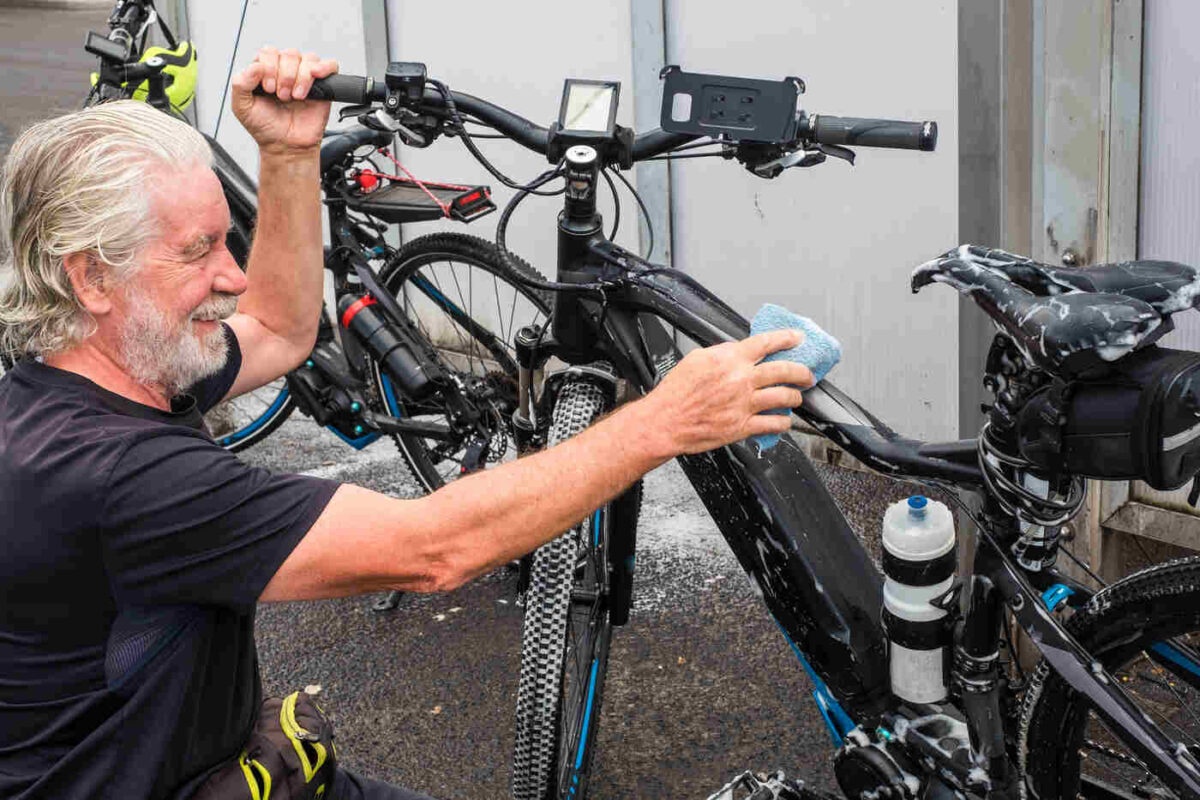
Safe e-bike washing precautions
- Remove the battery first. Wipe the battery contacts with a dry cloth while it is out and inspect for green or white corrosion residue. Follow Bosch eBike battery care guidelines for specific advice.
- Never spray water directly at the motor housing, battery compartment, display unit or wiring connectors.
- Use a garden hose on its gentlest setting held at least 30 centimetres away. A bucket and sponge method is even safer. If the water pressure feels strong on your hand, it is too strong for your bike.
- Use a damp cloth around all electronic components.
- Dry all electrical connection points thoroughly before reinstalling the battery. Allow at least 30 minutes of air-drying before powering the system back on.
But if your display shows error codes after cleaning, stop riding and book a diagnostic check. Domex Bikes vans carry Bosch and Shimano diagnostic equipment to identify the exact issue.
To find out more, take a look at our e-bike maintenance guide.
Bicycle Chain Cleaning Process
The drivetrain experiences the most wear, so your cleaning effort pays the biggest dividends here. With proper maintenance, bicycle chains can last between 2,000 and 3,000 miles. Poor cleaning routines can cause them to wear out in just 500 miles. For e-bikes, the extra motor torque means chains can wear out in under 1,500 miles.
How to clean your chain
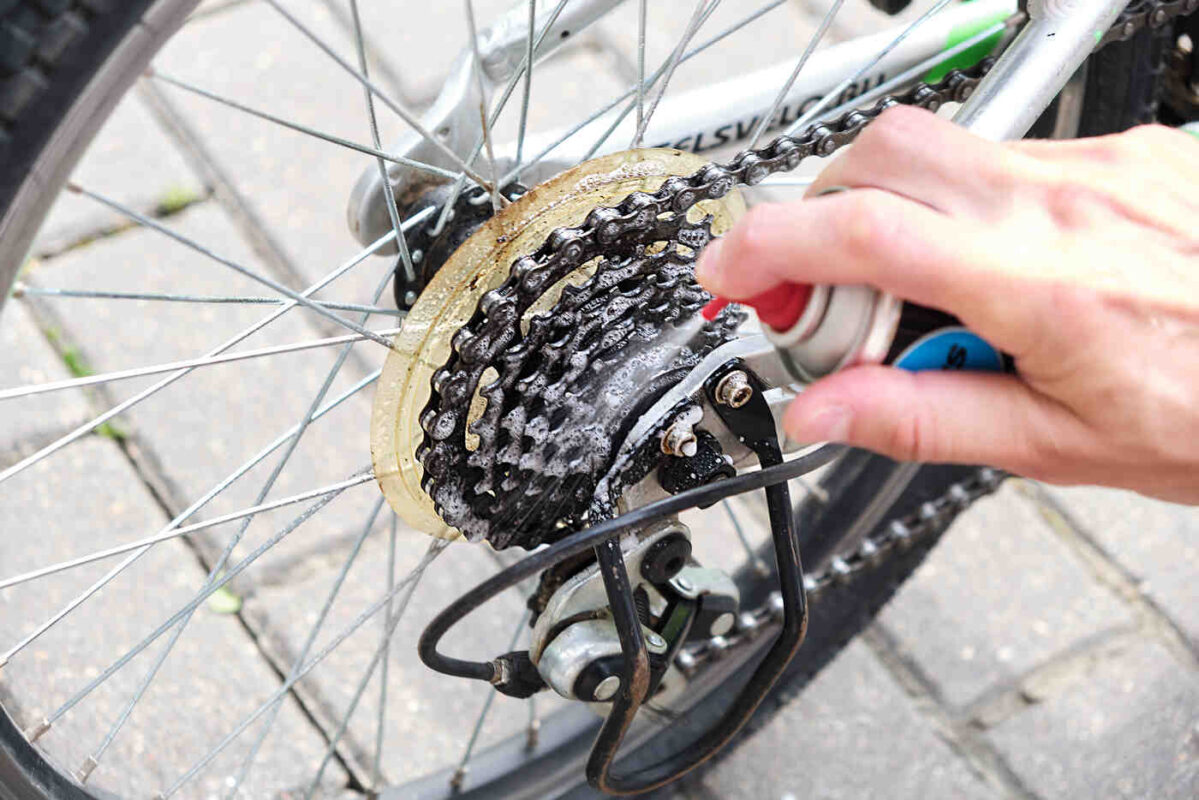
- Apply bike degreaser: Place the bike in a stable position. Apply degreaser directly to the chain while slowly backpedalling and let it work into the links for 30 to 60 seconds.
- Scrub the chain: Use an old toothbrush or chain cleaning brush to scrub each link. Focus on the inner plates where grime accumulates.
- Clean the cassette and chainrings: Use the same brush on the rear cassette sprockets and front chainrings because they collect abrasive grinding paste.
- Rinse thoroughly: Use clean water to remove all degreaser residue. Leaving degreaser on the chain strips protective oils and accelerates rust.
- Dry the chain: Wipe the chain firmly with a clean dry rag while rotating the pedals.
- Lubricate sparingly: Apply one drop of chain lube per link while backpedalling slowly, then wipe off all excess. The chain should feel slightly oily, never dripping.
Over-lubricating is a common mistake. Excess lube mixes with road grit to create a black grinding paste that wears out a cassette within six months. The Domex Bikes guide on how to lubricate a bike chain covers this process in full detail. If your chain already has rust, read the guide on how to clean a rusty bike chain first.
Servicing Brakes and Tyres at Home
Brakes and tyres link directly to your safety. Routine brake inspections and tyre pressure checks sit firmly in the DIY column, but advanced tasks require professional tools.
| Maintenance Task | Can Do at Home? | Requires a Professional? |
|---|---|---|
| Tyre pressure check and adjustment | Yes | No |
| Tyre sidewall and tread inspection | Yes | No |
| Inner tube replacement after puncture | Yes | No |
| Brake pad wear inspection | Yes | No |
| Brake cable fraying check | Yes | No |
| Brake rotor cleaning | Yes | No |
| Hydraulic brake bleeding | No | Yes |
| Brake cable replacement | No | Yes |
| Brake caliper alignment | No | Yes |
Hydraulic brake bleeding, cable replacement and caliper alignment require specialist tools. Attempting these without the right equipment can leave you with dangerously reduced stopping power.
Domex Bikes regular use bike servicing includes precision brake adjustment, wheel truing and full drivetrain inspections as standard.
READ MORE: How to Bleed Hydraulic Bike Brakes
Kids’ Bike Care
I believe that you can turn bike care into a Saturday routine with kids. It builds great habits early.
- Small parts drop chains: Grit builds up fast on small gears, causing sticky brakes.
- Kids push through faults: Children rarely notice a drop in performance. They just pedal harder.
- Family safety checks: Cleaning lets you find loose bolts before a fall happens.
Who does what?
- Ages 4–6: They rinse mud away with a sponge under your close supervision.
- Ages 7–10: Kids scrub the chain with an old toothbrush and squeeze tyres for firmness.
- Ages 11+: Older children handle the wash and check the brakes with guidance.
Use mild washing-up liquid because it protects skin and paintwork. Avoid car degreasers. Keep chain oil out of reach. Frog bikes feature lightweight aluminium frames that scratch easily, so skip harsh scrubbing. And do not over-tighten bolts during reassembly because aluminium is softer than steel.
Book a Domex Bikes checkup after growth spurts to adjust saddle height and brake reach.
Cargo Bikes and Bromptons
Since you cannot flip cargo bikes upside down, sometimes it is easier to have us bring the workshop to your driveway.
Cargo and e-cargo models
Clean cargo bikes exactly where they stand. Pay close attention to areas beneath the platform, around the motor and inside chain guards.
- Remove all bags and child seats before starting.
- Use a long-handled brush to reach under the deck where road grime collects.
- If your model is electric, take the battery out first.
Brompton folding bikes
- Keep hinges clean: Wipe folding points with a damp cloth. Avoid stiff brushes that push grit deeper inside.
- Water precautions: Never spray water directly into hinge clusters because it causes rust.
- After washing: Apply one tiny drop of light oil to each pivot. Wipe away the excess until it feels dry.
- Flat storage: Clean your Brompton before folding it to avoid staining your carpets.
The Five Big Cleaning Mistakes
Here’s what I often see bike owners do that can cost them more over the long run:
- Over-lubing: Excess oil attracts dirt. It turns into a black grinding paste that destroys cassettes. Apply one drop per link, then wipe the chain until it feels barely oily.
- Pressure washing: High-pressure jets force water past rubber seals into motor housings. Use a bucket and sponge instead.
- Harsh chemicals: WD-40 is a solvent, not a lubricant. Stick to bike cleaners or gentle washing-up liquid to protect paint and carbon.
If you ride a carbon frame, cleaning also presents a good opportunity to inspect for damage — our guide on carbon frame damage signs explains what to look for once the grime is off. - Skipping the rinse: Leaving degreaser on your chain strips away vital internal oils and speeds up rust. Rinse with fresh water.
- Oily brake rags: Wiping brake discs with greasy cloths ruins stopping power. Use fresh rags for brakes. Clean contaminated rotors with isopropyl alcohol.
London Environmental Foes
- Winter road salt: TfL salts cycle routes to prevent ice. But salt causes rapid rust. Rinse your chain and battery contacts with plain water after every freezing ride.
- Traffic pollution: Central London grime creates an abrasive film on moving parts. Wash your bike monthly even if it looks clean.
- Thames moisture: High humidity near the river accelerates rust in outdoor sheds. Dry your bike completely and spray steel bolts.
- Autumn leaves: Wet leaves create an acidic sludge that jams brake calipers. Clear leaf mulch away immediately.
When to Call Domex
Home care keeps your ride smooth, but advanced tasks require certified mechanics.
| Task | DIY at Home | Call Domex |
|---|---|---|
| Tyre pressure adjustments | Yes | No |
| Brake pad wear checks | Yes | No |
| Chain stretch measuring | No | Yes |
| Hydraulic brake bleeding | No | Yes |
| Gear cable replacement | No | Yes |
| E-bike digital error codes | No | Yes |
But if your e-bike flashes fault codes, stop riding. Domex vans carry full Bosch and Shimano diagnostic tools straight to your door.
Domex Bikes’ mobile repair locations
Our flat-rate call-out fee covers your full assessment and quote across these areas:
Conclusion
Cleaning your bike does not need to be an hour-long ritual after every ride. For most London cyclists, a 20-minute routine once a month keeps the drivetrain healthy. It prevents the kind of neglect that turns into expensive repairs. The goal is removing the grit that causes actual wear and catching safety issues before they escalate.
E-bikes, kids’ bikes and cargo models each need slight variations on the basic routine. But the principle remains the same. Clean when performance suffers or visible dirt builds up, dry thoroughly, lube sparingly and do not overthink it.
And when cleaning reveals bigger issues like stretched chains or frayed cables, that is when we come in. Domex Bikes handles everything from quick mobile tune-ups to full e-bike diagnostics across London and Surrey. Sometimes the best maintenance decision is knowing when to hand the tools over to an expert.
Want a professional clean without the elbow grease? We bring a full eco-friendly bike cleaning service directly to your door.
Frequently Asked Questions
For regular London commuters, every two to four weeks is ideal. Clean off-road bikes as soon as possible after a muddy ride. In winter, give the bike a quick rinse with plain water after riding on salted roads. Let performance guide you. If the chain sounds gritty or shifting feels rough, it is time to clean it.
No. High-pressure water forces its way past protective bearing seals. On e-bikes, it can penetrate motor housings and electrical connections, causing expensive damage. Use a garden hose on a gentle setting or a bucket and sponge. If the water pressure hurts your hand, it is too powerful for your bicycle.
Always remove the battery before you start. Never spray water directly at the motor, battery housing, display screen or wiring ports. Use a damp cloth around the electronics. Keep your rinse low-pressure and dry all electrical connection points thoroughly before putting the battery back in.
If your gears still shift poorly after a thorough clean and lube, your chain might be stretched. Chains typically last between 2,000 and 4,000 miles based on your riding conditions. A chain wear gauge measures this stretch precisely. Replacing a worn chain early saves you from paying for an expensive new cassette later.
Yes. Bike maintenance teaches children great technical awareness and responsibility. Stick to mild washing-up liquid instead of harsh chemical degreasers when kids help out. Keep the chain lube out of reach and apply it yourself. Younger kids can rinse the frame while older kids can learn to use a cleaning brush.
Cleaning reveals mechanical problems but does not always fix them. If your shifting remains rough or your brakes feel spongy after a wash, book a mobile service visit. We come to your home or office with a full workshop van to diagnose the issue. Our call-out fee covers your complete assessment and quote.
Don’t Just Take Our Word For It
★★★★★ Average Rating: 4.9/5
See why riders across London and the South East trust Domex to keep their e-bikes moving.


I’d use again.


Stu had extensive knowledge and was able to diagnose the issues very quickly. The parts were ordered and arrived the following day and Stu returned to finish the work.
We are very happy to have found Domex and will use them in future as our first choice service/repair company.
Thank you Stu


Straight forward to Use
I Don't have anything Negative to Say
Sheng was Friendly and Fantastic with his Repairs
Arrived within the Timed Window
Was true to his word about the Repair needs
Carried out the Repair in their Company Van
Safe & Secure Payment System
I will Deffinately be Using them again👍🏻
They will travel to your home or place of work
This is all new to Me, Never heard of a Mobile Bike Repair Company so this is Great for Me

Domex experience from first booking, to needing to speak to the team has been super and offering repair to fit my budget.
They went above and beyond!
Honestly, I can only see myself using them in future as it made the whole process super simple even to payment (Apple Pay) at the end of the service.
Keep up the great work


I got a call an hour before the mechanics arrival, he sorted the job needed quickly and cleanly and offered some additional sound advice.
I will be using again and would happily recommend Domex bike repairs/servicing to others.


as said Excellent CHAP.


Can't recommend highly enough.

Great friendly service.


whilst knowing bikes inside out. Really great experience. 100% recommended.

